

Read Replica vs Standby Understanding High Availability
Read replica vs standby is an important comparison when designing a reliable database infrastructure. Both technologies help improve database availability and resilience, but they serve different purposes. A read replica typically handles read-only queries to reduce pressure on the primary database, while a standby node primarily supports recovery and continuity when the primary database becomes unavailable.
Choosing the right database architecture depends on application workload, recovery requirements, infrastructure costs, and performance expectations. Understanding how replication, failover, and synchronization work helps businesses build systems that remain reliable during outages and maintain a better experience for users.
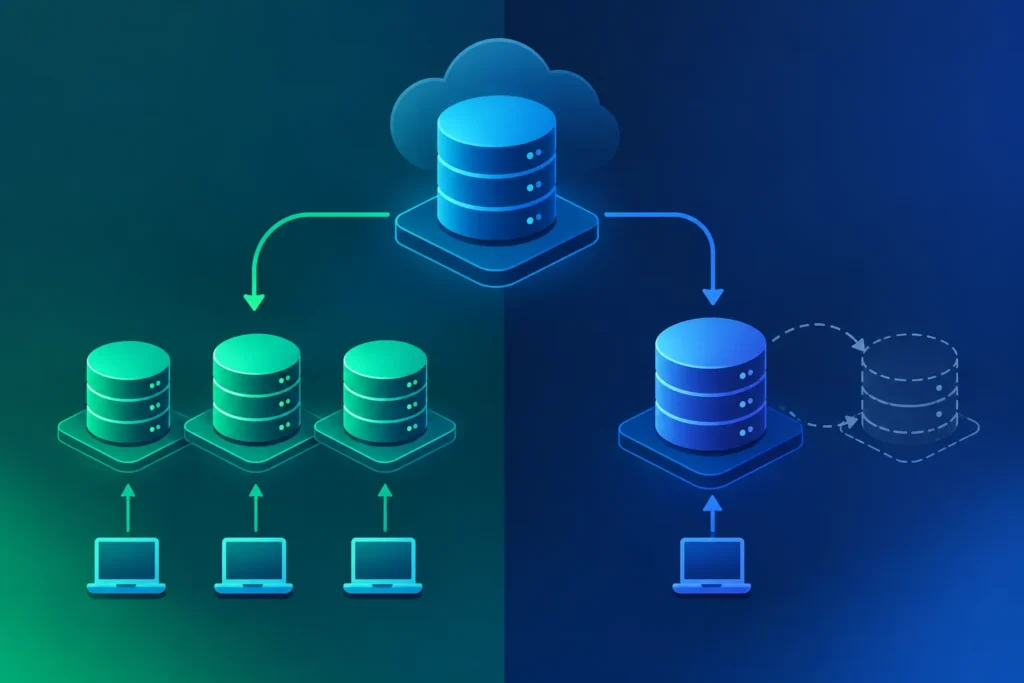
Key Differences Between Read Replicas and Standby Nodes
A read replica receives replicated database changes from a primary database and can serve supported read queries. It helps distribute database workloads, particularly when applications generate substantial reporting, analytics, or content retrieval traffic.
A standby node maintains a replicated copy for recovery purposes. Depending on the database platform and configuration, it may remain passive until failover or operate as a hot standby that can be promoted when the primary database fails.
Primary Purpose
Read replicas primarily improve read scalability, while standby nodes primarily support database recovery and service continuity.
Query Handling
Read replicas can serve eligible read queries; standby nodes generally prioritize readiness for recovery and failover.
Failover Capability
Read replicas may support promotion, while standby configurations are designed around recovery procedures and automatic or manual failover.
Data Synchronization
Both replicate database changes, but synchronization modes, replication lag, and consistency guarantees depend on the database technology.
Read Replica vs Standby How to Choose the Right Architecture
When evaluating read replica vs standby, start by identifying the problem you need to solve. If your application experiences heavy read traffic, a read replica can distribute queries away from the primary database and help improve responsiveness. This is especially useful for dashboards, reporting systems, product catalogs, and applications that retrieve large amounts of information.
If your main priority is minimizing downtime during database failure, a standby node is often a more suitable component of a high-availability architecture. It maintains a replicated database state and can take over when the primary server becomes unavailable, provided that the required failover configuration is in place. The recovery process depends on the database platform and infrastructure design. It is also important to understand replication lag and data consistency. Asynchronous replication can leave replicas or standby nodes temporarily behind the primary database. Synchronous replication can improve durability guarantees but may introduce additional latency or affect write availability. Your choice should reflect your recovery point objective (RPO), recovery time objective (RTO), and tolerance for temporary service interruptions.
Benefits of Using Read Replicas and Standby Nodes
Understanding the difference between read replica vs standby helps you design infrastructure that balances application performance with recovery readiness. Both approaches can strengthen database reliability when configured and monitored appropriately.
Improved read performance
Read replicas distribute eligible read queries across additional database instances, reducing pressure on the primary server and supporting applications with demanding reporting workloads.
Stronger recovery readiness
Standby nodes maintain replicated data and provide a recovery path when the primary database fails, helping reduce service interruptions.
Flexible infrastructure planning
Combining replicas and standby nodes lets teams separate read scaling from recovery requirements while aligning resource allocation with business priorities.
Six Best Practices for Database High Availability
Define recovery objectives
Establish acceptable data loss and downtime limits through RPO and RTO targets before choosing replication and failover configurations.
Monitor replication lag
Track replication delay, connection health, and synchronization errors to identify potential data freshness issues before they affect application behavior.
Test failover regularly
Perform controlled recovery exercises to verify promotion procedures, application reconnections, routing changes, and recovery time under realistic conditions.
Choose the correct replication mode
Evaluate asynchronous and synchronous replication based on write latency, consistency requirements, network conditions, and acceptable risk of data loss.
Protect every database node
Apply access controls, encryption, security patches, monitoring, and backup policies consistently across primary, replica, and standby infrastructure.
Plan for infrastructure failures
Distribute database nodes across appropriate failure domains and avoid dependencies that could cause a single outage to affect every node.
Frequently Asked Questions
A standby node generally focuses on recovery rather than serving application queries. Some database platforms support readable standby configurations, but capabilities vary by technology.
Replication lag is the delay between a database change occurring on the primary and becoming available on a replicated node. Significant lag can affect read freshness and recovery outcomes.
Yes. Many architectures use read replicas to distribute query workloads and standby nodes to support recovery. The appropriate configuration depends on availability goals, budget, and database platform capabilities.