

Real Time Data Processing Infrastructure Build Faster, Smarter Data Systems
Real Time Data Processing Infrastructure helps businesses collect, process, analyze, and respond to data as it is generated. Instead of waiting for large batches of information to be processed later, organizations can use real-time systems to make faster decisions, automate operations, monitor applications, and improve customer experiences.
Modern businesses generate enormous amounts of data from websites, mobile applications, IoT devices, payment systems, cloud applications, customer platforms, and connected services. A reliable infrastructure allows this information to move continuously through data pipelines, processing engines, databases, APIs, and analytics platforms.
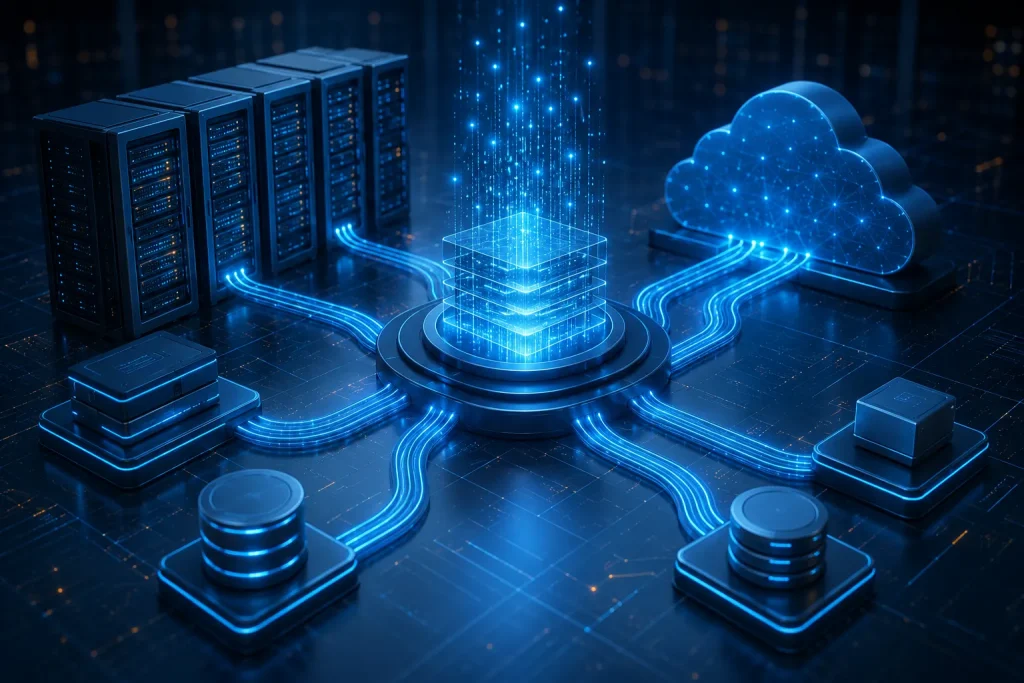
Why Real Time Data Processing Infrastructure Matters
Businesses increasingly need immediate access to operational and customer data. Traditional batch processing can create delays between the moment information is generated and when it becomes available for analysis.
A well-designed Real Time Data Processing Infrastructure reduces these delays and allows applications and teams to work with current information.
Faster Business Decisions
Real-time information allows teams to identify changing conditions quickly and respond before opportunities or problems become larger.
Automated Operations
Real-time processing can trigger automated workflows when specific events, transactions, or system conditions occur.
Better Customer Experiences
Applications can personalize recommendations, notifications, offers, and services based on continuously changing customer activity.
Improved System Monitoring
Organizations can continuously monitor applications, servers, transactions, and network activity to identify unusual behavior quickly.
How Real Time Data Processing Infrastructure Works
A modern Real Time Data Processing Infrastructure generally consists of multiple connected layers that work together to move information from its source to the final application or analytics system. The first layer collects events from applications, devices, APIs, databases, websites, and business systems. These events are then transferred through streaming or messaging technologies.
The processing layer analyzes incoming information, applies business rules, filters events, performs calculations, and prepares data for applications or storage. The final layers store processed information and deliver results to dashboards, applications, analytics platforms, machine learning systems, and automated workflows. This architecture allows organizations to process continuous data streams without depending entirely on traditional batch-based workflows.
Key Components of Real Time Data Processing Infrastructure
Data Sources
Data sources generate continuous events from applications, websites, IoT devices, databases, payment platforms, customer systems, and connected services.
Event Streaming
Event streaming platforms move continuously generated information between applications and processing systems while supporting scalable data pipelines.
APIs and Applications
APIs deliver processed information to websites, mobile applications, dashboards, customer platforms, and internal business applications.
Best Practices for Real Time Data Processing Infrastructure
Design for Scalability
Build the infrastructure so processing capacity can increase as data volume, users, transactions, and connected devices grow.
Reduce Processing Latency
Choose efficient data pipelines, processing technologies, storage systems, and network architectures to minimize unnecessary delays.
Implement Strong Data Security
Use encryption, authentication, authorization, secure APIs, access controls, monitoring, and appropriate data governance throughout the infrastructure.
Monitor Every Critical Layer
Track application performance, processing latency, event failures, infrastructure health, resource utilization, and data pipeline performance.
Build Fault-Tolerant Systems
Use replication, recovery mechanisms, redundant services, retries, and reliable message handling to reduce the impact of infrastructure failures.
Choose Infrastructure Based on Business Requirements
Technology selection should consider data volume, latency requirements, scalability, compliance, budget, integration requirements, and application complexity.
Frequently Asked Questions
It helps businesses make faster decisions, automate workflows, improve customer experiences, monitor systems, and respond quickly to changing events.
Common technologies include event streaming platforms, message brokers, stream processing engines, distributed databases, cloud computing services, APIs, caching systems, and monitoring tools.
Businesses can improve infrastructure by optimizing data pipelines, reducing latency, implementing scalable architecture, strengthening security, monitoring performance, and designing reliable recovery mechanisms.